

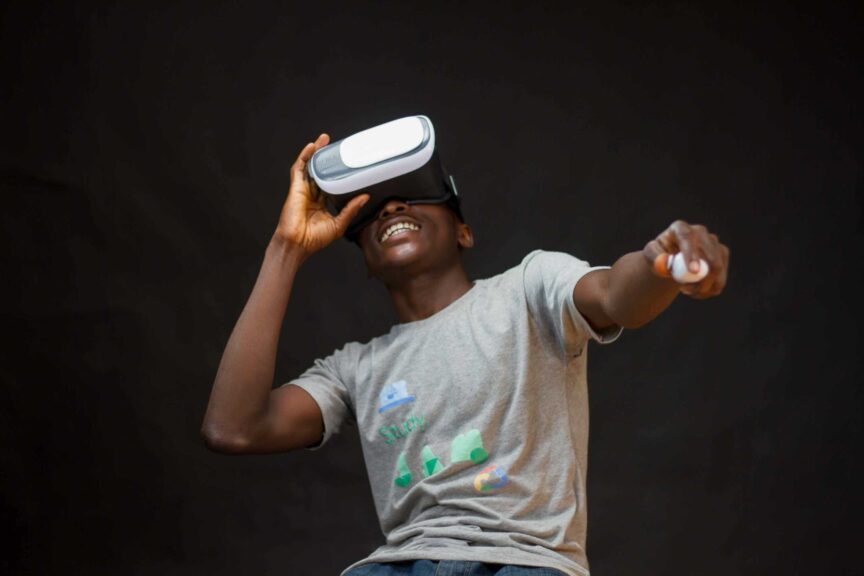
AR and VR Sports might change how you think about mental health. You know that moment in Wii Sports bowling when you land a perfect strike and, for a breathless second, you feel like a monarch of motion? Turns out, that little flicker of joy isn’t just ego—it’s neuroscience. Researchers at Michigan State University decided to explore whether AR and VR sports games are just clever distractions or if they actually nourish the mind. What they found? It’s quietly revolutionary.
A new study published in the International Journal of Human–Computer Interaction confirms what many of us have felt but couldn’t quite name: playing AR and VR sports games can genuinely boost psychological well-being. So yes, those hours spent perfecting your virtual table tennis backhand weren’t just indulgent—they were medicinal.
How Does This Digital Ritual Work?
Researchers Sanghoon Kim and Sangchul Park surveyed 345 players who engage with games like Wii Sports, Meta’s Home Sports, and other immersive simulators. They weren’t just looking at gameplay—they were mapping emotional terrain. What they found was layered and deeply human.
- Social Connection Is the Catalyst: The mental boost wasn’t just about gameplay mechanics—it was about presence. When players engaged in real-time interaction, celebrated virtual wins, or exchanged banter through avatars, their brains registered it as genuine social bonding.
“When people feel present with others through avatars or virtual interaction, the experience becomes more than just a game,” said Kim.
- A Balm for Loneliness: The effect was even more pronounced for those who reported feeling isolated. For these players, digital play became a portal to belonging. “Even in gaming, it’s shaped not only by what people experience in virtual environments, but also by how those experiences connect with their real-life relationships and social ties,” Kim and Park explained.
Not a Cure-All, But a Compass
Before you swap your therapist for a VR headset, the researchers offer a gentle reminder: this isn’t a universal fix. Some users still feel awkward or disconnected in virtual spaces. The tech isn’t magic—it’s a medium. And like any ritual, it requires intention.
Still, the authors suggest AR and VR sports games could be integrated into therapeutic settings—with guidance. It’s not about replacing care; it’s about expanding the ways we access it.
What This Means for the Future of Play
This study is a quiet triumph for the gaming world. It reframes play as sacred, connection as possible, and digital space as fertile ground for healing. So the next time someone questions your evening in a VR headset, you can say—with full poetic authority—that you’re tending to your well-being.
Now, if you’ll excuse me, I have a virtual bowling championship to win. For my health, obviously.