


Everyone gets songs stuck in their heads that just won’t go away. They sneak into your subconscious. They are epic earworms that you find yourself humming uncontrollably, singing in the shower, or tapping the beat to with your foot or ballpoint pen when you should be working. Sometimes they even keep you awake at night. Whether they are current hits, one-hit wonders, movie soundtrack gems, holiday favorites, or songs from your youth, their catchy vocals, riffs, hooks, and choruses seem to linger for days.
Here, those songs find a home, no matter the genre. Here, those epic earworms are revisited, explained, and celebrated. Here, you may find the song that haunts you tomorrow. Here is today’s unescapable song of the day…and the story behind it.
Today’s Epic Earworm: Don McLean — “American Pie”
Today’s epic earworm, Don McLean’s “American Pie,” is one of music’s timeless classics. The song reached number one on the charts in the United States in 1972 and remained there for four weeks. It also topped the charts in Australia, Canada, and New Zealand. It has six platinum certifications in the U.S., and it has been streamed over 1.6 billion times. McLean still earns over $400,000 a year in royalties for the song. That is pretty good for a man who was rejected by record labels 72 times before finally getting signed.
When “American Pie” was first released, it came out on 7-inch vinyl 45s. That posed a problem for a song that was eight-and-a-half minutes long. It ended up split in half, with the beginning of the song on Side A and the ending on Side B. At the time, “American Pie” was the longest song to ever top the Billboard Hot 100. It would be 50 years before that record would fall to Taylor Swift‘s “All Too Well (Ten Minute Version)” in 2021.
“The Day the Music Died”
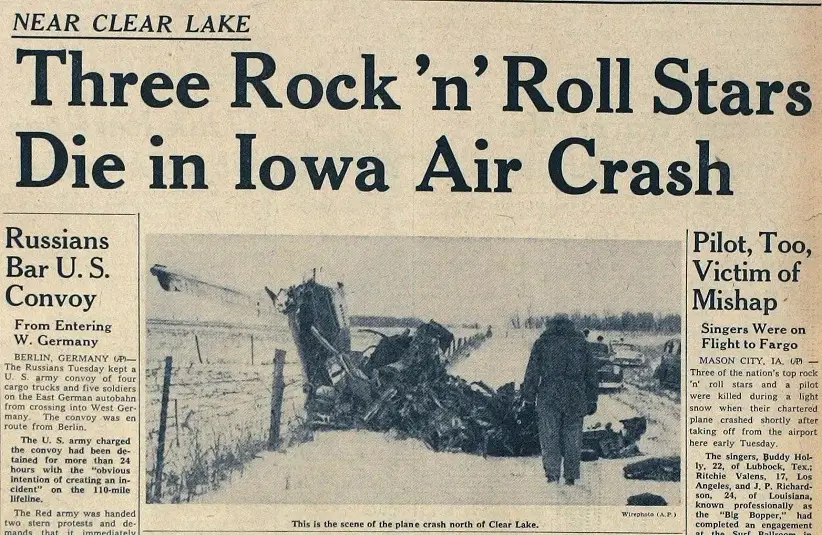
By now, everyone knows the pop culture reference “the day the music died.” That day (February 3, 1959) was the day that Ritchie Valens, Buddy Holly, and “The Big Bopper” (J.P. Richardson Jr.) died in a plane crash in a snowy field outside of Clear Lake, Iowa. McLean grew up a fan of Buddy Holly, and he remembers that day well. He was 13 years old and had a job as a paper boy in New Rochelle, New York. As he cut the twine on the bundles of newspapers he was to deliver the following morning, he saw the headlines telling of the 1 a.m. crash.
McLean wrote “American Pie” 11 years later. He has remained fairly tight-lipped about most of the references in the epic earworm for well over 50 years. So, while people have speculated that the jester is Bob Dylan, and the lady who sang the blues was Janis Joplin, we may never know for sure. Even when the singer makes an occasional comment, it usually does not reveal anything more than the fact that the song is about what was going on in the world during his formative years.