

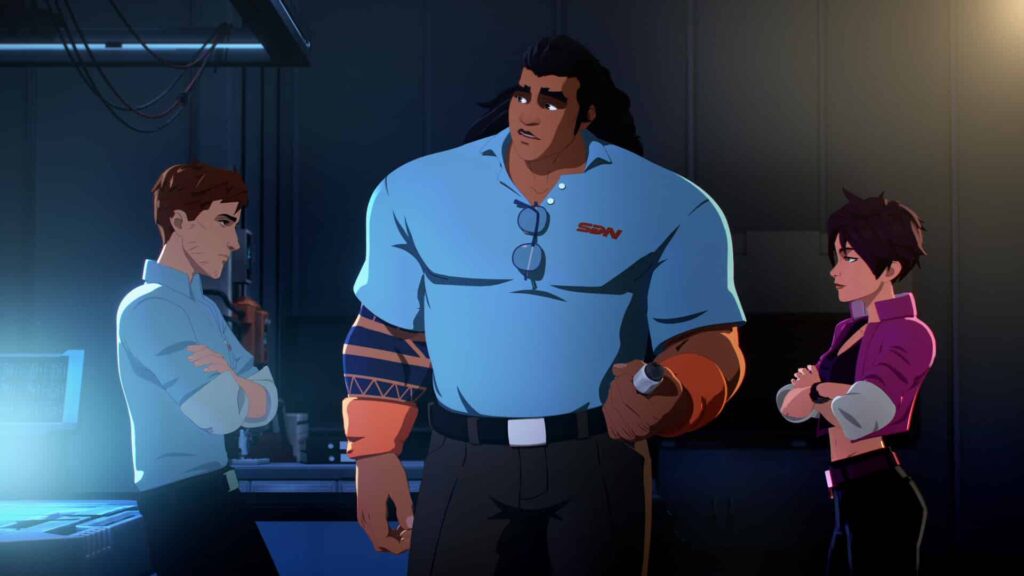
Back in 2018, Dispatch wasn’t a game—it was a season’s worth of live-action scripts, built for an interactive TV experience. AdHoc Studio, founded by veterans from Telltale, Ubisoft, and Night School, had the tech partner, the format, and the vision. Then COVID hit. Hollywood shut down. The tech partner pivoted. And the project was shelved.
“We kind of put it on the shelf for a while,” said creative director Dennis Lenart. But the bones were strong. When the team returned, they didn’t just revive the concept—they reshaped it. The result is Dispatch, a beautifully animated comedy about a washed-up superhero managing a dispatch line of reformed villains. It’s part Barry, part The Bear, part management sim, and very much a spiritual successor to the Telltale legacy.
Episodic Release, Prestige TV Cadence
Image of Dispatch, Courtesy of AdHoc StudioUnlike the slow-drip model that frustrated fans of Life Is Strange and The Wolf Among Us, Dispatch is launching two hour-long episodes per week over a single month. That’s four weeks, eight episodes, and no waiting around for months between cliffhangers.
Lenart says the team learned from past mistakes: “People would pay money and then go, ‘I thought you said next week,’” he told Eurogamer. “And it was like, ‘Actually, maybe it’s three or four weeks… We’ll let you know in a few weeks.’ And then that’s a horrible situation.”
The goal now? Keep the momentum. Keep the conversation alive. Treat each episode like a cultural beat—Succession Sundays for the superhero set.
Management Sim Meets Moral Dilemma
At its core, Dispatch is a branching narrative game with quicktime events and dialogue choices—but it’s also a management sim. You’re not just choosing what to say—you’re choosing who to send, what mission to prioritize, and how to balance redemption arcs with tactical efficiency.
It’s a clever twist on the genre. And it’s emotionally charged. These aren’t just missions—they’re second chances. And you’re the one holding the headset.
What This Means for Narrative Games
Dispatch is a great example of a proof of concept being successful. That a shelved TV show can become a playable story. That prestige pacing can work in games. That management mechanics can deepen emotional stakes.
It’s launching October 22. And if it lands, it might just redefine what episodic storytelling looks like in 2025.