
The History and Meaning of “We Three Kings”

“We Three Kings,” original titled “Three Kings of Orient,” is also known as “We Three Kings of Orient Are.” This is the way the song starts. What we now know is that the song is a Christmas carol written by John Henry Hopkins Jr. in 1857. It will celebrate its 150th anniversary next year. Hopkins wrote the carol for a Christmas pageant in New York City. “We Three Kings” was the first popular song written in the United States. Do you think there is a better song to celebrate the Epiphany?
“We Three Kings” Explanation
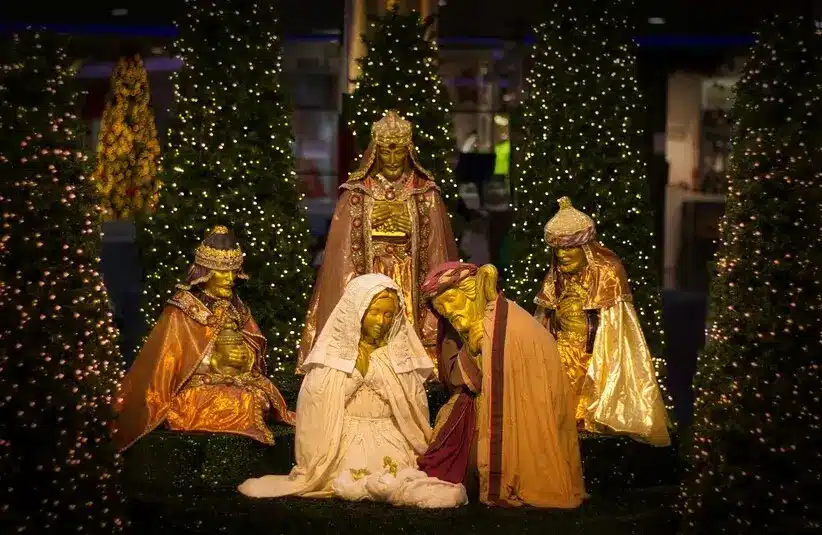
“We Three Kings” centers on the Magi, or Kings, who, in the Bible, are said to have visited Jesus as a child in a manger. This explanation only appears in one of the four Gospels, the Gospel of Matthew. The Kings are said to have come “from the East,” and though we can guess, nobody knows for sure where they came from. Sometime after his Nativity, it may have been up to two years later, they gave him gifts of gold, frankincense, and myrrh while paying homage to him. The gifts were symbolic; gold, for example, was for a King.
Though the New Testament is bereft of details, there are verses in the Old Testament that foretell of the visitors. In Isaiah 60:6: “The wealth of the nations will come to you. A multitude of camels will cover you. The young camels of Midian and Ephah; All those from Sheba will come; They will bring gold and frankincense and will bear good news of the praises of the Lord.” and two selections from the Psalms – Psalm 72:10: “The kings of Tarshish and of the isles shall pay tribute, The Psalms also tell of the Kings of Arabia and Saba offer gifts.” “We Three Kings” probably comes from this interpretation.
The names of the Magi, Melchior, Caspar, and Balthazar, and their status as kings from the Orient, are based on tradition. That the story of these Magi only appears in the Gospel of Matthew makes their actual coming somewhat suspect. The number three comes from the fact that there were three separate gifts given; that is all.
The solo verses and the final verse of “We Three Kings” explicitly invoke a tradition in which the three gifts symbolize three aspects of Jesus. This is important, as the gifts were highly symbolic, plus if you ever have to give gifts to a King, you should know this. “King” (gold, representing wealth and power), “God” (incense, representing worship), and “sacrifice” (myrrh, used to embalm the dead).
When he was writing “We Three Kings” in 1857, John Henry Hopkins Jr. served as the rector of a Church in Williamsport, Pennsylvania. Although he originally worked as a journalist and studied to become a lawyer, he chose to join the clergy upon graduating from the University of Vermont. He studied at the General Theological Seminary in New York City, and after graduating and being ordained a deacon in 1850, Hopkins became its first music teacher in 1855, holding the post until 1857 alongside his ministry.
John Henry Hopkins
John Henry Hopkins was born in Pittsburgh, Pennsylvania. He graduated from the University of Vermont with a master’s degree in 1845. After a short career as a journalist, he graduated from the General Theological Seminary in 1850 and became a deacon, author, illustrator, and designer. Hopkins wrote words and music to “We Three Kings” (his most famous hymn) as part of a Christmas pageant for his nieces and nephews.
Though it was written in 1857, the song did not appear in print until his “Carols, Hymns, and Songs” appeared in 1863. His nephew, John Henry Hopkins III, is credited with the music for “I Sing a Song of the Saints of God,” a popular children’s hymn in the Episcopal Church. John Henry Hopkins III served as rector of Trinity Church in Plattsburgh, New York, from 1872 to 1876 and of Christ Episcopal Church in Williamsport, Pennsylvania, from 1876 to 1887. He delivered the eulogy at the funeral of President Ulysses S. Grant in 1885 and died in Hudson, New York.
Conclusion
“We Three Kings” is a popular hymn that is sung in churches the world over at the Epiphany, when the three Magi are said to have visited Jesus. However, this visit may not have taken place as the account of the event appears only in one of the four Gospels. It is also thought that the visit of the Magi may have occurred up to two years after the birth of Jesus.